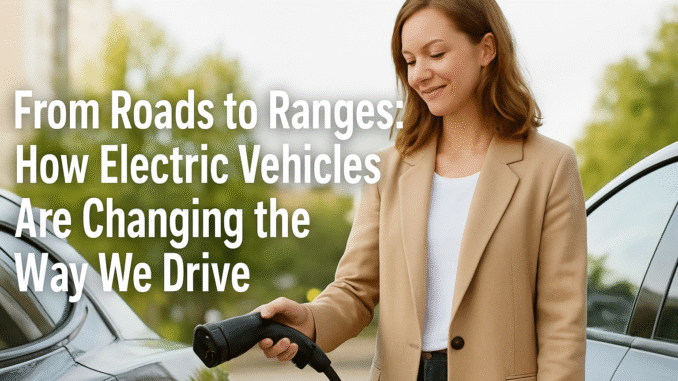
From Roads to Ranges: How Electric Vehicles Are Changing the Way We Drive
The automotive industry is in the middle of a historic transformation, and at the center of it all is the electric vehicle (EV). What began as a niche option for environmentally conscious drivers has rapidly evolved into a mainstream choice, reshaping not just how cars are built, but also how we think about driving itself.
From the city streets to long-distance highways, electric vehicles are altering our expectations for performance, convenience, and sustainability. In 2025, this shift is no longer just about swapping gas for electricity—it’s about embracing a new driving culture.
Let’s explore how EVs are changing the way we drive, from the roads we travel to the ranges we demand.
1. Electric Vehicles Are Redefining Driving Performance
For decades, drivers associated speed and power with gasoline engines. Now, EVs are proving that electric power can match—and often exceed—traditional performance benchmarks.
Instant Torque and Acceleration: Unlike gas engines, which build up power gradually, electric motors deliver instant torque. This means that even budget-friendly EVs can accelerate rapidly, making city driving more responsive and highway merging easier.
Quieter Rides: The near-silent operation of electric motors creates a calmer driving experience, reducing noise fatigue and making in-car conversations more pleasant.
Low Center of Gravity: Batteries are typically placed under the floor, improving weight distribution and stability, which enhances handling around corners and at higher speeds.
In short, EVs are not just matching traditional cars in performance—they’re setting new standards.
2. Longer Ranges Are Breaking Old Barriers
One of the biggest early concerns about EVs was range anxiety—the fear of running out of battery before reaching a charging station. Fast-forward to 2025, and EV range has improved dramatically.
Modern EVs routinely achieve 300 to 500 miles on a single charge, depending on the model and driving conditions. For most people, this is more than enough for daily commuting, weekend getaways, and even longer road trips.
Factors Driving Range Improvements:
- Battery Technology Advances: Solid-state and high-density lithium-ion batteries are increasing capacity without adding significant weight.
- Improved Efficiency: Aerodynamic designs, regenerative braking, and smarter energy management systems extend range.
- Eco-Driving Modes: Drivers can choose settings that optimize efficiency for long-distance travel.
These improvements mean that electric cars are no longer just for short city drives—they’re ready for the open road.
3. Charging Infrastructure Is Growing Everywhere
The expansion of charging networks is making EV ownership more convenient than ever. In 2025, fast-charging stations are popping up in highways, shopping centers, workplaces, and even rural areas.
Key Developments:
- Ultra-Fast Charging: New charging stations can add 200+ miles of range in under 20 minutes.
- Home Charging Convenience: Many drivers charge overnight at home, waking up to a “full tank” every day.
- Smart Charging Integration: Charging stations are now linked to apps that locate the nearest spot, monitor charging progress, and even schedule charging during off-peak electricity hours.
As charging becomes more accessible and faster, range anxiety continues to fade into history.
4. Lower Maintenance Is Changing Ownership Costs
EVs are mechanically simpler than traditional cars. With fewer moving parts, they require less maintenance and fewer repairs over their lifespan.
EV Maintenance Advantages:
- No Oil Changes: Electric motors don’t need motor oil, eliminating one of the most frequent maintenance tasks.
- Fewer Brake Replacements: Regenerative braking slows the car while recharging the battery, reducing wear on brake pads.
- Simplified Drivetrain: Without transmissions, exhaust systems, or complex fuel delivery components, there’s less to maintain and fewer parts to fail.
This not only saves drivers money but also reduces the hassle of frequent service visits.
5. Driving Styles Are Becoming Smarter and More Efficient
EVs come equipped with advanced digital systems that encourage more mindful and efficient driving.
Energy Consumption Displays: Real-time readouts show drivers how acceleration, braking, and terrain affect range, encouraging smoother driving habits.
Regenerative Braking Control: Many EVs allow drivers to adjust how aggressively regenerative braking kicks in, enabling “one-pedal driving” where lifting your foot off the accelerator slows the car significantly without touching the brake pedal.
Route Optimization: Built-in navigation systems take charging stops into account when planning routes, ensuring efficiency and reducing travel stress.
These features help drivers get the most out of their battery while making trips more predictable and stress-free.
6. EVs Are Influencing Road Trip Culture
In the past, long road trips meant gas station stops every few hundred miles. Now, EV road trips are becoming a unique experience that blends travel with technology.
Planned Charging Stops: Apps recommend scenic or convenient places to charge, encouraging drivers to take short breaks and explore new areas.
Integrated Infotainment: While charging, drivers can enjoy entertainment, catch up on work, or relax in comfortable, tech-filled cabins.
Community Growth: EV owners often share charging spots and trip advice online, creating a collaborative travel culture that’s distinct from traditional road trips.
The road trip experience is becoming less about rushing to the destination and more about enjoying the journey.
7. Sustainability Is Driving Consumer Choices
Many people choose EVs because they align with a sustainable lifestyle. While zero tailpipe emissions are the most obvious benefit, the environmental advantages go deeper.
Cleaner Energy Use: As the global grid shifts toward renewable energy, EVs become cleaner over time.
Recycling Programs: Automakers are developing ways to reuse or repurpose old EV batteries for stationary energy storage.
Sustainable Manufacturing: More EV manufacturers are using recycled materials, plant-based upholstery, and energy-efficient factories.
This eco-conscious approach is influencing purchasing decisions and inspiring more consumers to join the electric revolution.
8. EVs Are Driving Policy and Infrastructure Changes
The rise of electric vehicles is pushing governments and industries to rethink transportation infrastructure and policy.
Incentives and Tax Credits: Many countries are offering financial incentives to encourage EV adoption.
Low-Emission Zones: Some cities are creating zones where only electric or low-emission vehicles are allowed, improving air quality.
Grid Modernization: Energy providers are upgrading power grids to handle increased EV charging demand while promoting renewable energy integration.
This synergy between technology and policy is accelerating the transition to cleaner transportation.
9. Technology Integration Is Making EVs Smarter
Today’s electric vehicles are as much about software as they are about hardware. Over-the-air updates, artificial intelligence, and connected features are enhancing the driving experience.
Voice-Activated Controls: Drivers can adjust climate settings, navigation, or music without taking their hands off the wheel.
Driver Assistance Systems: Many EVs come standard with adaptive cruise control, lane-keeping assist, and automatic emergency braking.
Over-the-Air Improvements: Automakers can roll out new features and performance upgrades remotely, keeping vehicles up to date for years.
This ongoing digital evolution keeps EVs ahead in terms of both safety and convenience.
10. Changing the Way We Think About “Fuel”
Perhaps the most profound change is psychological. EVs shift our mindset from thinking about fuel as a scarce resource to seeing energy as something that can be managed and replenished at home.
Instead of visiting gas stations, most drivers simply plug in overnight. Public charging then becomes an occasional activity, not a daily necessity.
This fundamental change in fueling habits affects everything from daily routines to the way automakers design future vehicles.
Conclusion: From Roads to Ranges and Beyond
Electric vehicles are not just a technological upgrade—they’re a lifestyle change. They’re reshaping how we drive, how far we travel, how we maintain our cars, and even how we think about energy.
From improved performance and extended ranges to a growing charging network and a greener footprint, EVs are proving that the future of driving is not only possible—it’s already here.
As technology advances and infrastructure expands, the shift from roads powered by gasoline to ranges powered by electricity will only accelerate, driving us toward a cleaner, smarter, and more connected future.