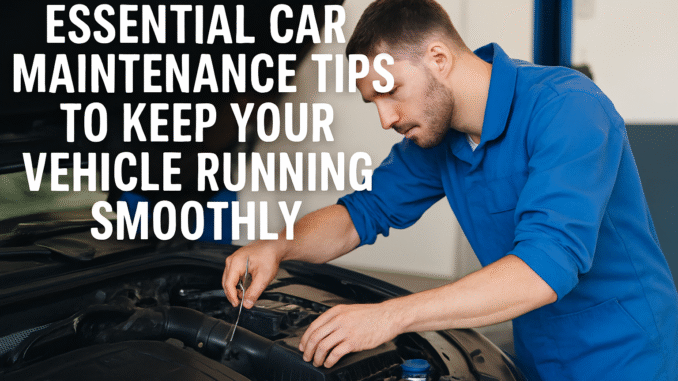
Essential Car Maintenance Tips to Keep Your Vehicle Running Smoothly
Regular car maintenance is the key to ensuring your vehicle performs efficiently, lasts longer, and keeps you safe on the road. Whether you’re driving a brand-new car or an older model, following essential maintenance steps can help you avoid costly repairs and breakdowns.
In this guide, we’ll cover the most important car maintenance tips every driver should know to keep their vehicle running smoothly year after year.
1. Regularly Check and Change Your Engine Oil
Engine oil is the lifeblood of your car’s engine. It lubricates moving parts, reduces friction, and prevents overheating. Over time, oil can break down and become contaminated with dirt and debris, which can cause engine damage.
Maintenance tips:
- Check your oil level at least once a month using the dipstick.
- Follow your manufacturer’s recommendations for oil change intervals (typically every 5,000–7,500 miles for modern cars).
- Use the correct oil type and viscosity as specified in your owner’s manual.
Pro tip: If your engine oil looks thick, dark, or gritty, it’s time for a change—regardless of mileage.
2. Inspect and Maintain Your Tires
Your tires directly affect handling, fuel efficiency, and safety. Proper tire maintenance can prevent blowouts and improve your car’s performance.
Maintenance tips:
- Check tire pressure monthly and before long trips. Underinflated tires can reduce fuel efficiency and cause uneven wear.
- Rotate your tires every 5,000–8,000 miles to promote even wear.
- Check tread depth regularly—replace tires when the tread depth is less than 2/32 of an inch.
- Inspect for cracks, bulges, or nails that could cause leaks.
Pro tip: Invest in a portable tire inflator and keep it in your trunk for emergencies.
3. Replace Air Filters Regularly
Your car has two main air filters: the engine air filter and the cabin air filter.
- The engine air filter keeps dirt and debris from entering the engine.
- The cabin air filter ensures clean air inside the vehicle.
Maintenance tips:
- Replace your engine air filter every 12,000–15,000 miles, or as recommended.
- Change your cabin air filter at least once a year to maintain good air quality inside your car.
Pro tip: If you drive in dusty or polluted areas, check and replace filters more often.
4. Keep Your Battery in Good Condition
Your car battery powers the electrical systems and is essential for starting the engine. A weak battery can leave you stranded.
Maintenance tips:
- Check battery terminals for corrosion and clean them with a wire brush if needed.
- Ensure the battery is securely mounted.
- Test your battery’s charge at least twice a year, especially before winter.
- Replace the battery every 3–5 years.
Pro tip: Keep jumper cables or a portable jump starter in your car.
5. Monitor Fluid Levels
Besides engine oil, your vehicle relies on other fluids for optimal performance.
Fluids to check regularly:
- Coolant: Prevents overheating and protects the engine.
- Transmission fluid: Keeps gears shifting smoothly.
- Brake fluid: Ensures effective braking performance.
- Power steering fluid: Makes steering easier.
- Windshield washer fluid: Keeps your windshield clean and visibility clear.
Pro tip: Use the correct type of fluid for each system—check your owner’s manual for specifications.
6. Inspect Brakes for Safety
Your brakes are your car’s most important safety feature. If you notice squeaking, grinding, or reduced braking power, get them checked immediately.
Maintenance tips:
- Inspect brake pads and rotors every 10,000–15,000 miles.
- Replace brake pads when they’re worn down to 3mm or less.
- Keep brake fluid at the proper level and replace it every 2–3 years.
Pro tip: Never ignore unusual sounds or vibrations when braking—these are warning signs.
7. Maintain Proper Wheel Alignment
Proper wheel alignment ensures your tires wear evenly and your vehicle handles correctly.
Signs of misalignment:
- Car pulls to one side when driving straight.
- Uneven or rapid tire wear.
- Steering wheel vibration.
Maintenance tip: Get your alignment checked every 12,000–15,000 miles or whenever you hit a large pothole.
8. Replace Wiper Blades When Needed
Clear visibility is essential for safe driving, especially in rain or snow.
Maintenance tips:
- Replace wiper blades every 6–12 months.
- Check for cracks, splits, or streaking on the windshield.
- Keep your windshield washer reservoir full.
Pro tip: Use winter-specific blades in cold climates to prevent freezing.
9. Keep Your Car Clean Inside and Out
Regular cleaning is more than just cosmetic—it also protects your car’s finish and interior.
Maintenance tips:
- Wash your car every two weeks to remove dirt, road salt, and contaminants.
- Apply wax every 3–4 months to protect the paint.
- Vacuum the interior regularly and clean spills immediately to prevent stains.
Pro tip: Don’t forget to clean under the car, especially during winter to remove salt buildup.
10. Follow the Manufacturer’s Maintenance Schedule
Your owner’s manual is your best guide for maintenance. It outlines when to replace parts and perform essential services.
Benefits of following the schedule:
- Maintains your vehicle’s warranty.
- Prevents unexpected breakdowns.
- Increases resale value.
Pro tip: Keep a maintenance log to track services and repairs.
11. Check Lights and Signals Regularly
Functioning lights are crucial for safety and compliance with the law.
Maintenance tips:
- Inspect headlights, brake lights, turn signals, and hazard lights monthly.
- Replace burned-out bulbs immediately.
- Keep light covers clean and clear from dirt.
12. Listen to Your Car
Often, your car will give you early warning signs of trouble.
Pay attention to:
- Strange noises like knocking, grinding, or squealing.
- Unusual vibrations or pulling while driving.
- Warning lights on the dashboard.
Pro tip: Address small issues early before they become expensive problems.
13. Prepare for Seasonal Changes
Different seasons bring different challenges for your vehicle.
Summer maintenance:
- Check coolant levels to prevent overheating.
- Inspect tires for heat-related damage.
Winter maintenance:
- Use winter tires for better traction.
- Keep your fuel tank at least half full to avoid fuel line freeze.
The Long-Term Benefits of Regular Maintenance
Following these car maintenance tips not only keeps your vehicle running smoothly but also provides several long-term benefits:
- Safety: Well-maintained brakes, tires, and lights help prevent accidents.
- Reliability: Fewer breakdowns mean more peace of mind.
- Resale value: A well-maintained car sells for more.
- Cost savings: Preventative maintenance is cheaper than major repairs.
Final Thoughts
Your car is a valuable investment, and taking care of it will pay off in the long run. By following these essential maintenance tips—checking fluids, inspecting tires, replacing worn parts, and keeping a clean interior—you’ll extend your vehicle’s lifespan and ensure it performs at its best.
Remember, maintenance isn’t just about preventing breakdowns; it’s about ensuring every journey is safe, comfortable, and worry-free.